Streamline
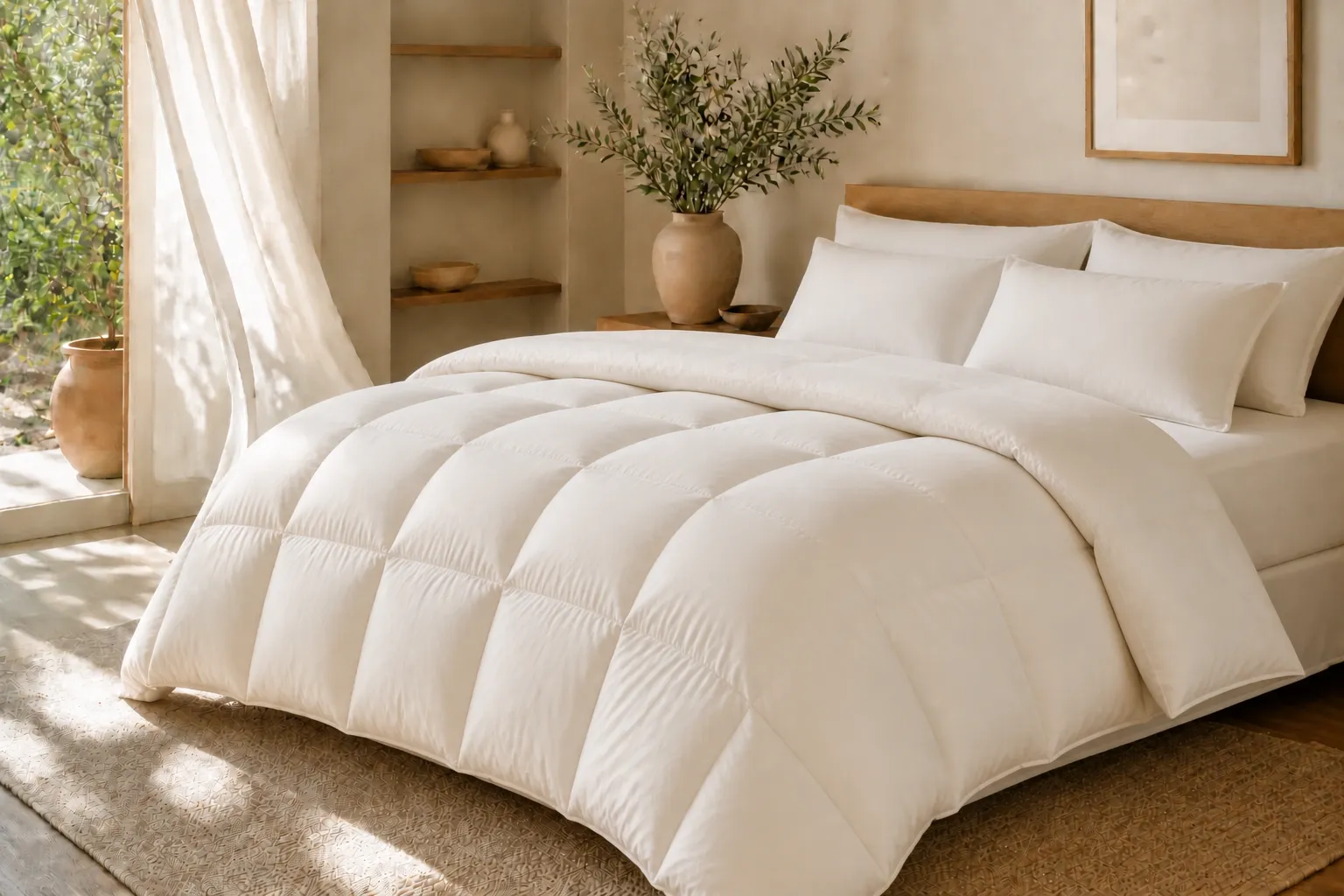
If you wake up overheated, kick your bedding off at 2 a.m., or feel stuck choosing between cozy and breathable, the usual advice is to look at natural fibers like wool for temperature control. cooling down comforter But a well-made, breathable down comforter can offer that same balance — airflow, moisture management, and year-round comfort — without giving up the loft and softness that make down worth choosing in the first place.
Why Down Gets an Undeserved “Too Hot” Reputation
Down clusters trap warm air extremely efficiently, which is exactly why lower-quality or overly heavy down comforters can feel stifling. But that’s a fill-weight and shell problem, not a fundamental property of down. A properly weighted down comforter with a breathable shell manages heat and moisture far better than most people assume, because the same structure that traps warm air also allows air to circulate when the fill is light enough and the shell lets it move.
What Actually Determines Whether a Down Comforter Sleeps Cool
A comfortable sleep temperature depends on more than raw insulation — it depends on how well a comforter buffers against both trapping heat and holding onto humidity. Two factors matter most: fill weight, which should be matched to your room rather than the coldest night you can imagine, and shell fabric, which determines whether heat and moisture escape or get sealed in.
For sleepers focused on staying cool and dry, a purpose-built option like the Luxecool Ultra-Lightweight Cooling Down Blanket is designed around exactly this priority — a cool-touch, moisture-managing shell paired with light, airy fill, built for sleepers who want the softness of down without the risk of overheating.
Shell Fabric Is Where the Real Difference Happens
This is the detail most comforter guides skip. A dense, tightly sealed shell can make even lightweight down feel warm, while a naturally breathable shell lets the same fill stay airy and comfortable. Linen is particularly effective here — its looser weave allows more airflow than a standard cotton sateen, which is why a comforter like the European Linen Goose Down Filled Comforter can feel noticeably cooler and less sealed-in than a comforter with identical fill but a tighter weave.
The Everyday, Breathable Default
For most households, the goal isn’t extreme cooling — it’s a comforter that doesn’t run hot in a warm room but still feels substantial enough for cooler nights. A breathable, well-balanced option like the Organic Cotton Goose Down Comforter fits that middle ground well, offering the crisp airflow of a cotton shell without sacrificing the loft that makes down feel worth the investment in the first place.
Down vs. the Alternatives People Reach For When They Want to Sleep Cool
Wool is often recommended for its moisture-wicking properties, and it does perform well in that specific area. But it also tends to feel denser and less lofty than down, and it usually requires gentler, more specialized care. Synthetic fills are easy to care for but rarely match down’s warmth-to-weight ratio, which often means they need more fill to achieve the same warmth — and more fill means more trapped heat. A well-made down comforter, matched to the right fill weight and shell, can outperform both on the specific combination of breathability, loft, and comfort most hot sleepers are actually chasing.

Matching Fill Weight to How You Actually Sleep
If you sleep hot most of the year, prioritize the lightest fill weight available paired with a breathable shell — cotton, linen, or a dedicated cooling fabric. If your bedroom runs cold but you still overheat easily, a moderate fill weight with a highly breathable shell often works better than a heavier comforter you’ll want to kick off halfway through the night. And for couples with mismatched temperature needs, a lighter, breathable down comforter on one side of the equation, paired with an extra throw for the colder partner, tends to work better than searching for one “compromise” comforter.
What to Check Before You Buy
Fill weight tells you how much insulation you’re actually getting — lighter isn’t automatically better, but it should match your room and body temperature rather than an imagined worst-case winter night. Shell fabric determines whether that fill stays breathable or gets sealed in. And construction quality, particularly even stitching that keeps fill from clumping, affects whether a lightweight comforter stays comfortable over months of regular washing rather than developing thin or lumpy spots.
The Bottom Line
A down comforter doesn’t have to be the heavy, overheating option people sometimes assume it is. The combination of the right fill weight and a genuinely breathable shell can deliver the same cooler, drier sleep experience people often look for elsewhere, without giving up the loft and softness that make down comforters worth choosing in the first place. The fix for overheating isn’t switching materials — it’s matching fill weight and shell fabric to how you actually sleep.
FAQ
Is a down comforter good for hot sleepers?
Yes, when the fill weight is light and the shell is breathable. The overheating that gives down its reputation usually comes from excess fill or a sealed, non-breathable shell rather than the down itself.
What shell fabric keeps a down comforter coolest?
Linen and dedicated cooling fabrics tend to breathe the most, followed by crisp cotton. A tightly woven, non-breathable shell can make even lightweight down feel warmer than it should.
Is down or wool better for temperature regulation?
Wool has strong natural moisture-wicking properties, but a well-matched down comforter — light fill weight, breathable shell — can offer comparable comfort with more loft and a lighter overall feel.